Open plan offices were supposed to tear down barriers and spark collaboration. Instead, Harvard research found they reduced face-to-face interaction by 70%. People put headphones in, avoided eye contact, and moved conversations to Slack. The problem was never the idea of openness. It was a fundamental misunderstanding of how office layout and collaboration actually connect.
The collision point principle
Real collaboration rarely happens in a meeting room booked three days in advance. It happens in the spaces between - at the coffee machine, along a circulation route, in a comfortable nook near the kitchen. MIT research on building design found that people are four times more likely to communicate regularly with someone who sits within 6 metres of them. The best office interior design engineers these moments of collision without forcing them.
That means thinking carefully about where teams sit relative to each other, how circulation flows through the floorplate, and where natural gathering points emerge. Place the best coffee in the centre of the floor, not the corner. Route the main corridor past different teams rather than around the perimeter. Position informal seating at intersections where different departments cross paths. These are small design moves with outsized impact.
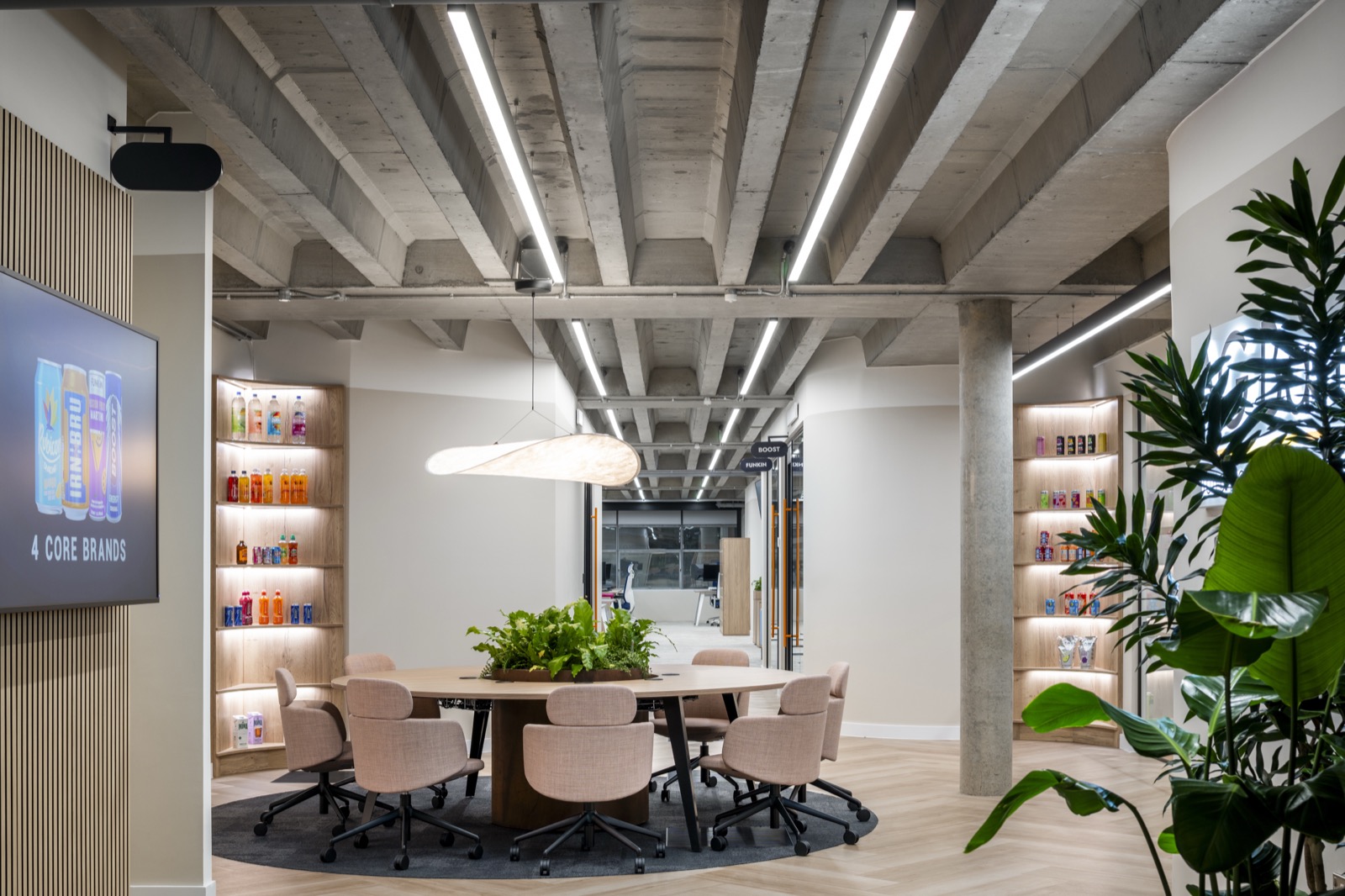
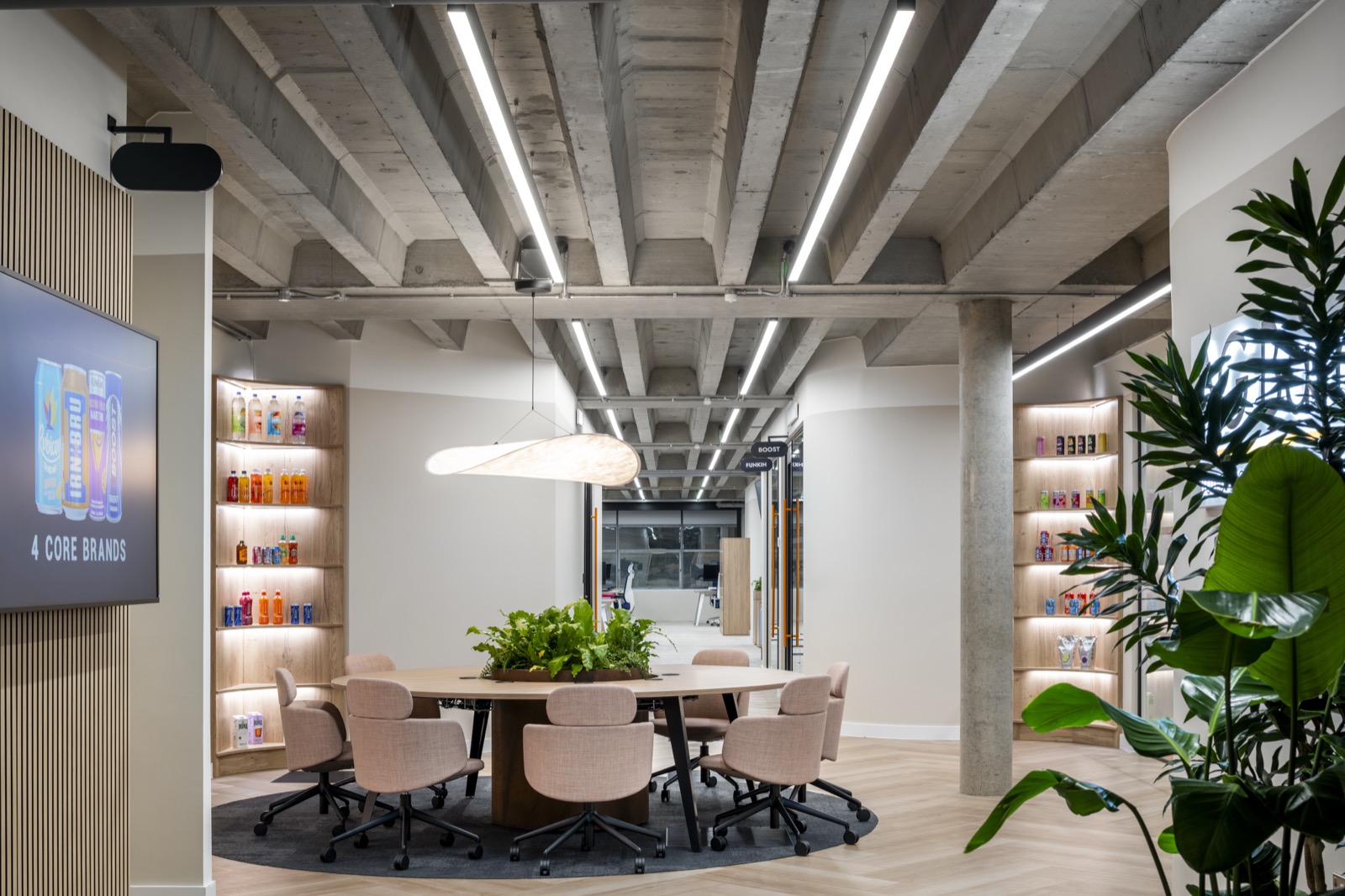
Varied seating arrangements give teams the freedom to work in the way that suits them best.
The quiet zone problem
Collaboration is only half the equation. Deep focus work - the kind that produces your team's best thinking - requires uninterrupted quiet. A layout that is all open plan gives people nowhere to retreat. The result is not more collaboration. It is more frustration, more context-switching, and lower quality output across the board.
The most effective layouts we design at Coda offer a spectrum: fully enclosed rooms for heads-down work, semi-enclosed booths for short calls or paired work, open zones for team activity, and social spaces for informal connection. The ratio depends on the business. A software company needs more focus space than a sales team. A creative agency needs more workshop space than an accounting firm. There is no universal formula - only a workplace strategy built around your specific people.
Collaboration is not about proximity. It is about the quality of the spaces between people. Get those right and the conversations take care of themselves.
Fixing the layout without starting from scratch
You do not always need a full office refurbishment to improve collaboration. Sometimes it is about reconfiguring what you already have. Move the kitchen to a more central position. Add acoustic screening to create quiet pockets. Replace long rows of desks with clusters that face each other. Introduce standing-height tables near team boundaries. These interventions are fast, affordable, and surprisingly effective.
We have seen the results across our project portfolio. Teams that were siloed start talking. People who worked from home three days a week start coming in four. The layout did not just change the space. It changed the culture. If your office layout is holding back collaboration, get in touch. We will help you figure out what is not working and what to do about it.